Tickets & Prices
Entrance fees for every seat class, what the experience show costs, child pricing and what's actually included at each tier.
Compare prices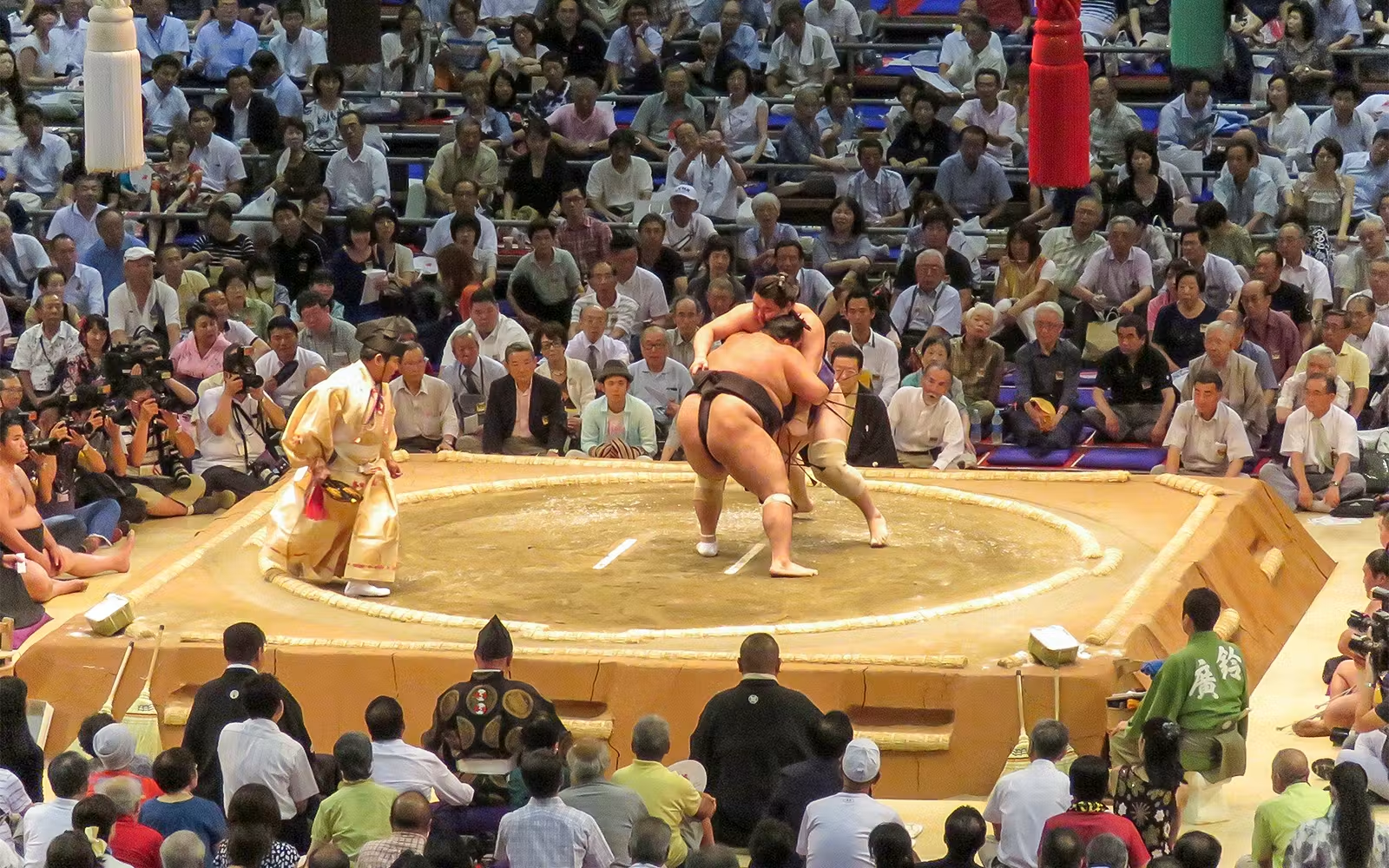
Independent Guide · Fukuoka & Japan
Everything you need to see live sumo: how the November Grand Sumo Tournament at the Fukuoka Kokusai Center works, what tournament admission really costs, and how to book a year-round sumo experience show with a chanko-nabe dinner — without wrestling with Japanese-only ticket sites.
Start here
Sumo in Japan runs on a fixed calendar, and Fukuoka only hosts professional competition once a year. That single fact decides everything about your booking, so settle it first.
Option one: the real tournament. The Kyushu Basho — the Grand Sumo Tournament held every November at the Fukuoka Kokusai Center — is the only honbasho (official tournament) staged outside Tokyo, Osaka and Nagoya. For 15 straight days, every wrestler in the professional ranks fights once daily, from teenage newcomers in the morning to yokozuna grand champions at dusk. If your trip lands between roughly 8 and 22 November, this is the version of sumo you came for. Read our Fukuoka sumo tournament tickets guide for seat classes and booking steps, or the basho guide to understand how a tournament day actually unfolds.
Option two: a sumo experience show. Outside November — which is most of the year — the way to see wrestlers up close is a sumo experience: retired professional rikishi demonstrate training drills and classic techniques, fight genuine exhibition bouts on a real dohyō, and pull volunteers from the audience to try their luck in the ring. The best-known show pairs the wrestling with an all-you-can-eat chanko-nabe hot pot, the protein-heavy stew wrestlers eat daily, plus a traditional dance performance and a souvenir photo. It runs daily, takes about two hours, and holds a 4.8-star rating across more than 7,800 verified reviews on GetYourGuide. Details in our ticket prices breakdown and show times & schedule guide.
| Quick summary | November tournament | Sumo experience show |
|---|---|---|
| When | 15 days in mid-November only (2026: Nov 8–22, per the official Japan Sumo Association calendar) | Year-round, daily shows |
| Where | Fukuoka Kokusai Center, Hakata waterfront | Purpose-built show venues (Tokyo/Asakusa; similar formats in other cities) |
| Price from | ~¥3,500–4,000 same-day upper tier; guided packages with S/A reserved seats cost more (official-site figures — verify before you buy) | ~US$99 standard seat incl. chanko meal (per current GetYourGuide listing) |
| Advance booking | Essential — weekends and final days sell out | Recommended; free cancellation up to 24h |
| Time needed | Half day to full day | About 2 hours |
Rule of thumb: in Fukuoka in November — book the tournament, it outranks everything. Any other month — book the experience show and, if you can, add a morning-practice visit at a sumo stable. Trying to "wait and decide in Japan" is how people end up watching sumo on a hotel TV.
Site guide
Entrance fees for every seat class, what the experience show costs, child pricing and what's actually included at each tier.
Compare pricesShow times through the week, the full tournament-day timetable from 8:45 doors to the 18:00 final bout, and when to arrive.
See the scheduleThe venue itself: seating map logic, sightlines, access from Hakata Station, lockers, food inside and rules worth knowing.
Know the venueHow to secure November tournament admission: official channels vs guided packages with S/A reserved seats and an English-speaking expert.
Book the bashoWhat a honbasho really is, why day 14 beats day 3, rituals decoded — dohyō-iri, salt, shiko — and etiquette in the stands.
Understand the bashoChanko-nabe explained, dinner-show options, eating around the Kokusai Center and where wrestlers themselves eat in Fukuoka.
Eat like a rikishiChoosing seats
Sumo seating is not one product with three price points — the categories are genuinely different experiences. Here is the honest breakdown we give friends:
| Option | Best for | What you get | Watch out for |
|---|---|---|---|
| Same-day upper tier | Budget travellers, spontaneous plans | The cheapest way into a real basho; the arena's steep bowl means even top rows see the dohyō clearly | Limited quantity, sold from the morning at the venue — queue early on weekends |
| Reserved arena chair (S/A/B) | Most first-time visitors | A numbered Western-style seat you can leave and return to all day | Official sales are largely in Japanese and open ~1 month ahead; popular days go fast |
| Guided tournament package Easiest | Non-Japanese speakers who want the full story | S- or A-class reserved seat, English-speaking sumo expert, banzuke ranking sheet, chanko meal — booked in English in two minutes | Costs more than a bare seat; strict no-refund terms — lock your dates first |
| Box seat (masu-seki) | Groups wanting the classic experience | Traditional four-person tatami box close to the action | Cushion seating is tough on knees for a full day; usually sold as whole boxes |
| Experience show + dinner | Anyone visiting outside November | Two hours of bouts, technique demos, audience challenges, all-you-can-eat chanko, photo with wrestlers | It's a show by retired pros, not a ranked competition — a different (and funnier) product |
Experience shows sell out on rainy-season evenings; tournament weekends disappear weeks ahead. Both cancel free of charge within their windows — the tournament packages don't, so check dates twice.
Timing is everything
Full timetables, division by division, are in the hours & schedule guide.
Save money
Getting there
The Fukuoka Kokusai Center sits on the Hakata waterfront at 2-2 Chikko Honmachi, Hakata Ward — about 2 km north of Hakata Station.
Full venue detail — seating bowl, lockers, food stalls, accessibility — lives in the Kokusai Center guide.
FAQ
For the November tournament: buy through the Japan Sumo Association's official channels (mostly Japanese-language, on sale about a month ahead) or book a guided tournament experience in English with reserved S/A seating. Outside November, book a year-round sumo experience show online.
The Kyushu Basho is scheduled for 8–22 November 2026 at the Fukuoka Kokusai Center — 15 consecutive days. Confirm exact dates on the official Japan Sumo Association calendar before booking flights.
Official-channel prices start around ¥3,500–4,000 for same-day upper-tier seats, with reserved arena chairs roughly ¥5,000–10,000 and box seats above that (figures from official sale channels; they change season to season). Guided packages including premium seats, guide and meal are priced on the live calendar.
Yes — it's the best-reviewed sumo product in Japan (4.8★, 7,800+ verified reviews) precisely because most travellers can't align with tournament weeks. You get real bouts by former pros, comedy, a chanko feast and ring access no tournament ticket ever offers.
For the tournament: yes, as early as possible — weekends and days 13–15 sell out first. For the show: a few days ahead is usually fine, but holiday evenings sell out too. Show bookings cancel free up to 24 hours before.
Normal clothes are fine at both. For the tournament bring cash for snacks and souvenirs, and travel light — large luggage isn't allowed at seats. November in Fukuoka averages a comfortable 12–17°C; a light jacket covers the evening walk back.
No — we're an independent guide with no affiliation to the Japan Sumo Association or any venue. Precise prices, dates and rules are taken from official sources and can change; bookings happen on licensed partner platforms.
Check live availability for your dates — free cancellation on show tickets, instant confirmation on both.